Piano Technicians Guild
WESTPAC - Western and Pacific Regional Conference
February 22-25, 2012
Salt Lake City, UT
Conference and Class Schedule [PDF]
Revised 2/4/12
Tuning Classes
NOTE: Click on an instructor's name to see a bio.
NEW!
Tuning on the Stage – often it’s what you don’t do that
matters most
Rick Florence
 Rick is a third generation piano technician, having apprenticed in his grandfather’s
(Carl Swendsen) shop in Calgary, Canada. He has since received training
at Yamaha USA (Disklavier, Little Red School House, and advanced training with
Terry Nimi), and factory training at Steinway, Schimmel and Bösendorfer.
Rick is the Senior Piano Technician at Arizona State University. In his 19
years as ASU, Rick has prepared pianos for over 4700 concerts, collaborating
with students, faculty, and some of the great musicians of our time.
Rick joined PTG in 1986 and his service includes local offices, Director of
the Utah State Seminar (1991), Director of the Arizona State Seminar (1994-2001),
Assistant Institute Director (2003-2005) and Institute Director (Rochester,
2006).
Rick is a third generation piano technician, having apprenticed in his grandfather’s
(Carl Swendsen) shop in Calgary, Canada. He has since received training
at Yamaha USA (Disklavier, Little Red School House, and advanced training with
Terry Nimi), and factory training at Steinway, Schimmel and Bösendorfer.
Rick is the Senior Piano Technician at Arizona State University. In his 19
years as ASU, Rick has prepared pianos for over 4700 concerts, collaborating
with students, faculty, and some of the great musicians of our time.
Rick joined PTG in 1986 and his service includes local offices, Director of
the Utah State Seminar (1991), Director of the Arizona State Seminar (1994-2001),
Assistant Institute Director (2003-2005) and Institute Director (Rochester,
2006).
The importance of stretch, unisons and stability. Discussion of pitch floating, touch-up vs. full tunings, and our collective self-destruction via temperament obsession. What do pianists (and audiences) hear? What do pianist want from a piano and how do we give it to them in a short period of time. Six checks you should never tune without.
NEW!
Advanced Topics in Tuning Stability
Steve Brady, RPT
 Steve
Brady, RPT served as head piano technician at the University of
Washington from 1978 till 2003. During those 25 years he tuned and prepared
pianos for approximately 5,000 concerts and recitals, and worked with most
of the leading pianists of our time. Steve served as editor of the Piano
Technicians Journal for six years (1995 to 2001). In 1996 he received
the Piano Technicians Guild’s “Member of Note” award, and in 1999 PTG published
his book, A Piano Technician’s Guide to Field Repairs, which recently
went into a second edition. His latest book, Under the Lid: The Art and
Craft of the Concert Piano Technician, was published in 2008. Steve
currently serves as head piano technician for the Aspen Music Festival and
School. In his spare time Steve enjoys cooking, tending his wine cellar,
and dancing Argentine tango. He lives in Seattle with his wife, the concert
pianist Judith Cohen.www.stevebradypiano.com
Steve
Brady, RPT served as head piano technician at the University of
Washington from 1978 till 2003. During those 25 years he tuned and prepared
pianos for approximately 5,000 concerts and recitals, and worked with most
of the leading pianists of our time. Steve served as editor of the Piano
Technicians Journal for six years (1995 to 2001). In 1996 he received
the Piano Technicians Guild’s “Member of Note” award, and in 1999 PTG published
his book, A Piano Technician’s Guide to Field Repairs, which recently
went into a second edition. His latest book, Under the Lid: The Art and
Craft of the Concert Piano Technician, was published in 2008. Steve
currently serves as head piano technician for the Aspen Music Festival and
School. In his spare time Steve enjoys cooking, tending his wine cellar,
and dancing Argentine tango. He lives in Seattle with his wife, the concert
pianist Judith Cohen.www.stevebradypiano.com
Why do pianos go out of tune? What can we as tuners do to make our tunings more stable? This class covers methods for creating stability in our tunings, including things we can do before, during, and after the tuning.
Where Are Those Beats?
Ward Guthrie, RPT
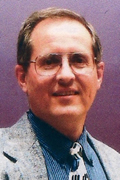 Ward
Guthrie has been a Piano Technicians Guild member since 1974 and a chapter
officer many of those years. He has served on many PTG committees, has been
an instructor at international and regional PTG institutes, was the Pacific
Northwest Regional Vice President, was the PTG Institute Director in Grand
Rapids, and is the Institute Director gain this summer in Seattle. He has received
the “Member of Note” award, two “Presidential Citations” from
PTG presidents Leon Spier and Marshall Hawkins as well as the “Outstanding
Leadership”, “PTG Cog” and the “James H. Burton” awards
from the Pacific Northwest Region.
Ward
Guthrie has been a Piano Technicians Guild member since 1974 and a chapter
officer many of those years. He has served on many PTG committees, has been
an instructor at international and regional PTG institutes, was the Pacific
Northwest Regional Vice President, was the PTG Institute Director in Grand
Rapids, and is the Institute Director gain this summer in Seattle. He has received
the “Member of Note” award, two “Presidential Citations” from
PTG presidents Leon Spier and Marshall Hawkins as well as the “Outstanding
Leadership”, “PTG Cog” and the “James H. Burton” awards
from the Pacific Northwest Region.
After your temperament is completed, how can you improve it? This class will emphasize aural skills and examine common temperament proofs. Where do beats come from? How do we use them? What are coincident partials? Why do proofs work? You will be shown a system to improve an existing temperament.
Intro to the Smartest iOS Reyburn CyberTuner
Dean Reyburn, RPT, and Carl Lieberman, RPT
Dean Reyburn, RPT - Reyburn CyberTuner
 Dean Reyburn passed his RPT exams in 1978 and has 30+ years tuning experience. He has served on the PTG Examinations and Test Standards Committee since 1996 and acts as Advisor and CTE skill reviewer. Dean has 12 years experience as concert tuner for the Grand Rapids Symphony and DeVos Hall in Grand Rapids, Michigan. He was the technician for the local Steinway and Yamaha dealers for many years and tuned for numerous concert and popular music artists. Dean attended Moody Bible Institute in Chicago from 1976 to 1978 where he majored in electronics and learned piano technology from Virgil Smith, RPT and Robert Carbaugh (and met his wife Marty). Dean is a self-taught Software Engineer with 25 years experience programming in more languages and computer platforms than he'll admit. He enjoys kayaking, tennis and scuba-diving in his spare time. www.reyburn.com
Watch a demonstration of the new release of RCT for the Apple iOS mobile devices, iPhone, iPod and iPad. See our new “Smart Final” tune mode for use in the most demanding situations. We analyze the program’s “thinking” behind its suite of Smart Features: Smart Pitch, Smart Partials and Smart Tune.
Tuning with the Verituner
Dave Carpenter, RPT
 Dave
is the lead designer of the Verituner electronic tuning devices www.veritune.com and
president of Veritune, Inc. Dave's background includes an engineering degree
from the University of Illinois and a career in software design. After discovering
the joy of piano technology, Dave joined the guild and pursued his Chicago
area piano service business. Combining his skills and interests, Dave embarked
on the development of a new tuning device in 1998, and since has enjoyed spending
the majority of his time supporting and improving the product line. A continual
student of piano acoustics, Dave is a frequent instructor at PTG conventions
and seminars, and an RPT member and past president of the PTG Chicago Chapter.
Dave
is the lead designer of the Verituner electronic tuning devices www.veritune.com and
president of Veritune, Inc. Dave's background includes an engineering degree
from the University of Illinois and a career in software design. After discovering
the joy of piano technology, Dave joined the guild and pursued his Chicago
area piano service business. Combining his skills and interests, Dave embarked
on the development of a new tuning device in 1998, and since has enjoyed spending
the majority of his time supporting and improving the product line. A continual
student of piano acoustics, Dave is a frequent instructor at PTG conventions
and seminars, and an RPT member and past president of the PTG Chicago Chapter.
The Verituner is now available on the high performance iPhone, iPod, and iPad devices from Apple. See up close how to take advantage of the unique tuning features of the Verituner product line. We will demonstrate how to perform pitch raises, fine tuning, setting standard pitch, temperament, custom stretch styles, and saving tunings. Learn the best practices for using the Verituner's exclusive inharmonicity measuring technology to give the best tuning on any piano with the fewest steps.