Piano Technicians Guild
WESTPAC - Western and Pacific Regional Conference
February 22-25, 2012
Salt Lake City, UT
Conference and Class Schedule [PDF]
Revised 2/4/12
Regulation Classes
NOTE: Click on an instructor's name to see a bio.
Grand Damper Systems Demystified
Rick Baldassin, RPT, Michael Spreeman, RPT and Carl Teel, Renner USA
Rick Baldassin, RPT - Renner USA
 Rick received his education and piano technology training from Brigham Young University. He is the author of the book On
Pitch, which was recently re-published. Rick served as the Tuning Editor for the Journal from 1987 to 1991. His teaching has taken him to piano factories and conventions throughout the United States, Canada, Europe, Russia, Korea and Australia. Rick has served as the Concert Technician for the Utah Symphony for over 20 years, and has been the Teaching and Technical Consultant for Renner since 1989. He has been trained in the concert and artist programs of Fazioli, Steinway and Yamaha, and has been a consultant to the Falcone, Mason & Hamlin, and Pramberger Piano Companies. Rick also serves as the Technical Support Director for Fazioli in North America. He is a Member of Note, Jim Burton, and Hall of Fame award winner. Rick and his wife Cindy currently operate Baldassin Pianos, a full-line rebuilding and retail showroom located in Salt Lake City.
Rick received his education and piano technology training from Brigham Young University. He is the author of the book On
Pitch, which was recently re-published. Rick served as the Tuning Editor for the Journal from 1987 to 1991. His teaching has taken him to piano factories and conventions throughout the United States, Canada, Europe, Russia, Korea and Australia. Rick has served as the Concert Technician for the Utah Symphony for over 20 years, and has been the Teaching and Technical Consultant for Renner since 1989. He has been trained in the concert and artist programs of Fazioli, Steinway and Yamaha, and has been a consultant to the Falcone, Mason & Hamlin, and Pramberger Piano Companies. Rick also serves as the Technical Support Director for Fazioli in North America. He is a Member of Note, Jim Burton, and Hall of Fame award winner. Rick and his wife Cindy currently operate Baldassin Pianos, a full-line rebuilding and retail showroom located in Salt Lake City.
Carl Teel - Renner USA
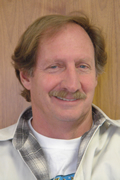 Carl
has been repairing and restoring pianos for over 30 years. He has been a member
of PTG since 1976, and since 1979 has served continuously as Treasurer of the
Salt Lake City Chapter. Carl was instrumental in running the Utah Intermountain
Seminar for a number of years. He is a popular instructor at local, regional
and national conventions, and is a consultant to piano technicians throughout
Utah.
Carl
has been repairing and restoring pianos for over 30 years. He has been a member
of PTG since 1976, and since 1979 has served continuously as Treasurer of the
Salt Lake City Chapter. Carl was instrumental in running the Utah Intermountain
Seminar for a number of years. He is a popular instructor at local, regional
and national conventions, and is a consultant to piano technicians throughout
Utah.
Michael Spreeman, RPT, Klavierbauer
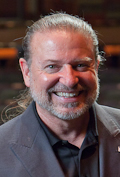 Michael is the creator of Ravenscroft Pianos and founder of Spreeman Piano
Innovations, LLC. Experience includes: 35 years as a concert technician, rebuilder,
service technician, and instructor. He has also worked as a technical consultant
for Renner, Fazioli, Yamaha, Steinway, and Baldwin. Education includes: apprenticeship
with Jim Coleman Sr., specialized Fazioli concert technician training in Sacile,
Italy, concert technician and Disklavier training with Yamaha Corporation of
America, and music studies at Arizona State University. Michael teaches nationally
and internationally at PTG and BDK conferences. www.RavenscroftPianos.com
Michael is the creator of Ravenscroft Pianos and founder of Spreeman Piano
Innovations, LLC. Experience includes: 35 years as a concert technician, rebuilder,
service technician, and instructor. He has also worked as a technical consultant
for Renner, Fazioli, Yamaha, Steinway, and Baldwin. Education includes: apprenticeship
with Jim Coleman Sr., specialized Fazioli concert technician training in Sacile,
Italy, concert technician and Disklavier training with Yamaha Corporation of
America, and music studies at Arizona State University. Michael teaches nationally
and internationally at PTG and BDK conferences. www.RavenscroftPianos.com
NOTE: Class Limit 24. Class is FULL.
Grand damper systems involve more than simply seating felt. In this hands-on class, you will cut and bend damper wires, adjust underlever spoons and capstans, and correct problems in damper lift. Timing with both the key and pedal will also be covered. This class has been adapted for general use from the Schimmel factory damper installation procedure. Each participant will work at one of the multi-note action models produced by Renner and Schimmel. All the necessary tools will be provided.
High Performance Regulation of the Kawai Grand Action
Don Mannino, RPT - Kawai
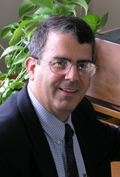 Don
Mannino, RPT, began an apprenticeship with a piano rebuilder while
completing his studies at San Diego State University as a piano performance
major in 1979. After working as an independent piano technician in the San
Diego area, he held the position of National Service Manager for Young Chang
Pianos, then was Manager of Technical Support for Kawai Pianos in the US
and Canada, and now serves as the Director of Technical Training for Kawai
and Shigeru Kawai Pianos. Don and his wife Patty are the editors of the
Southern California Combined PTG newsletter. In addition to teaching at
regional technician seminars, PTG Annual conventions, and at PTG chapter
meetings, he also has designed technicians tools and has had articles on
a variety of technical topics published in the Piano Technicians Journal,
including Action Center service, a series on grand action regulation, and
the use of plastics in piano actions. In 2010 he was certified in Japan
as a Kawai "Master Piano Artisan" (or MPA), the highest level of
technician for the Kawai company. Don resides in Cypress, CA with his wife
Patty. Their daughter Sarah is studying Aerospace Engineering at UCSD. www.shigerukawai.com
Don
Mannino, RPT, began an apprenticeship with a piano rebuilder while
completing his studies at San Diego State University as a piano performance
major in 1979. After working as an independent piano technician in the San
Diego area, he held the position of National Service Manager for Young Chang
Pianos, then was Manager of Technical Support for Kawai Pianos in the US
and Canada, and now serves as the Director of Technical Training for Kawai
and Shigeru Kawai Pianos. Don and his wife Patty are the editors of the
Southern California Combined PTG newsletter. In addition to teaching at
regional technician seminars, PTG Annual conventions, and at PTG chapter
meetings, he also has designed technicians tools and has had articles on
a variety of technical topics published in the Piano Technicians Journal,
including Action Center service, a series on grand action regulation, and
the use of plastics in piano actions. In 2010 he was certified in Japan
as a Kawai "Master Piano Artisan" (or MPA), the highest level of
technician for the Kawai company. Don resides in Cypress, CA with his wife
Patty. Their daughter Sarah is studying Aerospace Engineering at UCSD. www.shigerukawai.com
NOTE: This is a two-session class.
A seminar on getting the best performance from fine grand piano actions.
Included will be discussion and demonstration of factory style regulating
techniques, the trade-offs of various regulation specifications to meet
different needs, service pointers for getting the performance back into
worn actions, and a full top-to-bottom regulation process. Although this
class will feature the Kawai actions, much of the class material is applicable
to all fine grand piano actions.
Class level: Intermediate to Advanced
Measuring Protocols
Anne Garee, RPT
 Anne
Garee, Program Director for Piano Technology, has enjoyed her career as piano
technician at the Florida State University College of Music since 1983. She
joined the faculty in 2004 and directs the Master of Arts in Piano Technology
program mentoring trained piano technicians in one of the most comprehensive
colleges of music in the nation. She holds a Bachelor of Music degree in Piano
Performance and completed a three year apprenticeship program for the Certificate
in Piano Technology from the Bowling Green State University in Ohio. A Registered
Piano Technician with the Piano Technicians Guild, she is an active clinician
both in the U.S. and abroad. www.music.fsu.edu
Anne
Garee, Program Director for Piano Technology, has enjoyed her career as piano
technician at the Florida State University College of Music since 1983. She
joined the faculty in 2004 and directs the Master of Arts in Piano Technology
program mentoring trained piano technicians in one of the most comprehensive
colleges of music in the nation. She holds a Bachelor of Music degree in Piano
Performance and completed a three year apprenticeship program for the Certificate
in Piano Technology from the Bowling Green State University in Ohio. A Registered
Piano Technician with the Piano Technicians Guild, she is an active clinician
both in the U.S. and abroad. www.music.fsu.edu
Note: This class is limited to 20 hands-on participants. Pre-register at the conference registration desk.
This 90 minute class gives participants the opportunity to practice measuring techniques for grand action geometry analysis. Lines of convergence, action spread, stack height, string height, action ratio, and additional fore finishing topics will be explored. Improve your grand action renovation projects by establishing good measuring protocols.
“Grand Action Regulation (for power and repetition)”
Richard Davenport, RPT
 Richard Davenport, RPT, is a concert technician, formerly
a Technical Service Consultant for 24 years with Yamaha. He received advanced
training at Yamaha's concert grand factory in Japan and, more recently, at
the Fazioli factory in Italy. Since 1980, he has serviced pianos for 20th Century
Fox Studios as well as installing a new soundboard, action and pinblock in
their 1928 Steinway D. He regularly teaches PTG chapter seminars, regional
and national convention classes. Richard is a recipient of the PTG 2008 Hall
of Fame Award.
Richard Davenport, RPT, is a concert technician, formerly
a Technical Service Consultant for 24 years with Yamaha. He received advanced
training at Yamaha's concert grand factory in Japan and, more recently, at
the Fazioli factory in Italy. Since 1980, he has serviced pianos for 20th Century
Fox Studios as well as installing a new soundboard, action and pinblock in
their 1928 Steinway D. He regularly teaches PTG chapter seminars, regional
and national convention classes. Richard is a recipient of the PTG 2008 Hall
of Fame Award.
Why is friction necessary for proper action function? Why is hammer boring critical? Why is “the click” so important? How do we synchronize a double escapement action? Learn to regulate for maximum power and repetition without memorizing a list of specs.
Why I Used to Hate Damper Work
Rick Florence
 Rick is a third generation piano technician, having apprenticed in his grandfather’s
(Carl Swendsen) shop in Calgary, Canada. He has since received training
at Yamaha USA (Disklavier, Little Red School House, and advanced training with
Terry Nimi), and factory training at Steinway, Schimmel and Bösendorfer.
Rick is the Senior Piano Technician at Arizona State University. In his 19
years as ASU, Rick has prepared pianos for over 4700 concerts, collaborating
with students, faculty, and some of the great musicians of our time.
Rick joined PTG in 1986 and his service includes local offices, Director of
the Utah State Seminar (1991), Director of the Arizona State Seminar (1994-2001),
Assistant Institute Director (2003-2005) and Institute Director (Rochester,
2006).
Rick is a third generation piano technician, having apprenticed in his grandfather’s
(Carl Swendsen) shop in Calgary, Canada. He has since received training
at Yamaha USA (Disklavier, Little Red School House, and advanced training with
Terry Nimi), and factory training at Steinway, Schimmel and Bösendorfer.
Rick is the Senior Piano Technician at Arizona State University. In his 19
years as ASU, Rick has prepared pianos for over 4700 concerts, collaborating
with students, faculty, and some of the great musicians of our time.
Rick joined PTG in 1986 and his service includes local offices, Director of
the Utah State Seminar (1991), Director of the Arizona State Seminar (1994-2001),
Assistant Institute Director (2003-2005) and Institute Director (Rochester,
2006).
Virtually all damper problems can be traced back to one of four basic concepts. Master these, and you can tackle most any damper problem. Demonstration of damper adjustment tools and techniques. Presentation of an easy to use flow chart to troubleshoot damper problems.
Everything Upright
Paul Rea
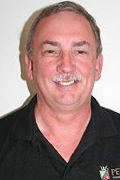 Paul
says that with 38 plus years in the music industry “There is nothing I can’t
do to a piano, and if there is… I know someone who can.” He also traveled the
country servicing player pianos and standard pianos. Paul is a certified Piano
Disc and QRS player system installer/technician, and quite proficient at touch
up and repair of polyester and conventional finishes. Paul has “sat in every
seat in the house” from bookkeeping, salesman, store manager, technician, factory,
as well as owning a retail store with his parents. Paul also owned a successful
tuning, rebuilding, refinishing and piano moving company for many years. The
past few years Paul has been with a major Southern California piano dealership
as a service manager and technician before accepting the National Technical
Service Managers position at the Pearl River Piano Group. Shortly after NAMM
this year (2007) Paul accepted the position at Petrof USA bringing his technical
knowledge and experience to Petrof USA as their National Service Manager. Paul’s
latest adventure is heading up Petrof USA LLC as the National Operations Manager. www.petrofpianosusa.com
Paul
says that with 38 plus years in the music industry “There is nothing I can’t
do to a piano, and if there is… I know someone who can.” He also traveled the
country servicing player pianos and standard pianos. Paul is a certified Piano
Disc and QRS player system installer/technician, and quite proficient at touch
up and repair of polyester and conventional finishes. Paul has “sat in every
seat in the house” from bookkeeping, salesman, store manager, technician, factory,
as well as owning a retail store with his parents. Paul also owned a successful
tuning, rebuilding, refinishing and piano moving company for many years. The
past few years Paul has been with a major Southern California piano dealership
as a service manager and technician before accepting the National Technical
Service Managers position at the Pearl River Piano Group. Shortly after NAMM
this year (2007) Paul accepted the position at Petrof USA bringing his technical
knowledge and experience to Petrof USA as their National Service Manager. Paul’s
latest adventure is heading up Petrof USA LLC as the National Operations Manager. www.petrofpianosusa.com
This class will cover Express Regulation of upright pianos; prepping uprights for sale both mechanically and cosmetically for dealers as well as repair or sale from your shop. We will cover the rules for avoiding “call backs”.
Centerpinning, Traveling & Squaring
Debra Cyr, RPT
 Debbie
learned piano tuning and repairs in 1990 as an apprentice as well as through
a correspondence course and then attended the rebuilding program at the North
Bennet Street School in Boston. She is an instructor at the North Bennet
Street School, as well as a rebuilder, and has an extensive private tuning
clientele. Debbie is past president of the Boston Piano Technicians
Guild and teaches at seminars and conventions on the local, regional and national
levels. www.nbss.org
Debbie
learned piano tuning and repairs in 1990 as an apprentice as well as through
a correspondence course and then attended the rebuilding program at the North
Bennet Street School in Boston. She is an instructor at the North Bennet
Street School, as well as a rebuilder, and has an extensive private tuning
clientele. Debbie is past president of the Boston Piano Technicians
Guild and teaches at seminars and conventions on the local, regional and national
levels. www.nbss.org
NOTE: This is a two-session class. Second class is "Centerpinning - hands-on."
Correct and uniform center pinning will provide a solid foundation for regulation and touch weight analysis. Correcting hammer alignment by traveling and squaring the hammers will assist regulation and voicing. During this class and the following hands-on, we will demonstrate proper and efficient methods for: rebushing flanges, repinning action centers (includes Teflon centers), traveling and squaring hammers.
Vertical Regulation and Action Diagnosis
Keith Bowman, RPT, and Mike Carraher, RPT
Keith Bowman, RPT - Hailun USA
 Keith has a broad background in woodworking spanning over 35 years. He has
been a PTG member since 1982, has served on a number of committees and is an
instructor for regional and Institute classes. He has originated a tool product
line for Renner USA, and is a factory R&D consultant for Hailun USA.
Keith has a broad background in woodworking spanning over 35 years. He has
been a PTG member since 1982, has served on a number of committees and is an
instructor for regional and Institute classes. He has originated a tool product
line for Renner USA, and is a factory R&D consultant for Hailun USA.
Mike Carraher, RPT - Renner USA
 Mike
has been a member of PTG since 1979 and an examiner for the RPT exams since
1981. He designed the first repair jigs for the technical exam and still participates
in their construction. For over 20 years Mike has taught various tuning and
regulation classes at the local, regional and Institute levels. He makes shop
fixtures for Renner USA, and is a technical consultant for Hailun USA.
Mike
has been a member of PTG since 1979 and an examiner for the RPT exams since
1981. He designed the first repair jigs for the technical exam and still participates
in their construction. For over 20 years Mike has taught various tuning and
regulation classes at the local, regional and Institute levels. He makes shop
fixtures for Renner USA, and is a technical consultant for Hailun USA.
Through the use of an action model, new factory procedures, tools and other class props, we will look at all aspects of vertical regulation with a focus on consistent aftertouch. From the sustain pedal to the hammer, learn how to diagnose action problems and solve common symptoms such as bobbling hammers.
A Picture Is Worth 1000 Words
Ward Guthrie, RPT
 Ward
Guthrie has been a Piano Technicians Guild member since 1974 and a chapter
officer many of those years. He has served on many PTG committees, has been
an instructor at international and regional PTG institutes, was the Pacific
Northwest Regional Vice President, was the PTG Institute Director in Grand
Rapids, and is the Institute Director gain this summer in Seattle. He has received
the “Member of Note” award, two “Presidential Citations” from
PTG presidents Leon Spier and Marshall Hawkins as well as the “Outstanding
Leadership”, “PTG Cog” and the “James H. Burton” awards
from the Pacific Northwest Region.
Ward
Guthrie has been a Piano Technicians Guild member since 1974 and a chapter
officer many of those years. He has served on many PTG committees, has been
an instructor at international and regional PTG institutes, was the Pacific
Northwest Regional Vice President, was the PTG Institute Director in Grand
Rapids, and is the Institute Director gain this summer in Seattle. He has received
the “Member of Note” award, two “Presidential Citations” from
PTG presidents Leon Spier and Marshall Hawkins as well as the “Outstanding
Leadership”, “PTG Cog” and the “James H. Burton” awards
from the Pacific Northwest Region.
Many regulation steps for grands and uprights are shown in this audio-visual presentation. How fast should the hammer rise? How do let-off and drop relate? What is the “click”? How is key height determined? How much side paly should there be in the key? How much aftertouch? You’ll learn all this and more, including short-cuts for making your regulation more efficient.
Upright Regulation Strategies
Paul Revenko-Jones, RPT
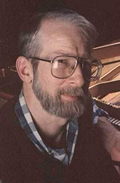 Paul grew up in the Washington, DC area, went to undergraduate school at Grinnell
College in Iowa (BA, philosophy 1968), and did his graduate work at the University
of Chicago (MA, English 1969). He was a dedicated brass player and played semi-professionally
in the Midwest while gaining an interest in piano technology. After his return
from the Peace Corps in 1971, he opened the first Music
of the Spheres Pianoworks shop in Washington, DC. After joining the Piano
Technicians Guild in 1987, he achieved RPT designation in 1989, and from 1987
served the PTG Chicago Chapter as editor of the newsletter, Secretary, Vice-president,
and President. He tuned for the Lyric Opera briefly in the 1990's, and now,
with his wife Oksana, operates a full piano restoration shop on Chicago's near
west side as well as servicing a substantial private tuning clientele. Paul
has been a regular teacher at regional and national PTG seminars and institutes
since the mid-1990's. He has also been an editor of the Piano Technicians
Journal from 2001-2005. In June, 2005, Paul received the Piano Technician's
Guild Jack Greenfield Award "in recognition of outstanding research and
writing of the best technical article for the Piano Technicians Journal." In
2004, he and Oksana founded The Chicago School for Piano Technology, and he
now serves as Executive Director of the School. His interests include writing,
the martial arts (ranked black belt and an instructor in aikido),
and sailing their 28' sailboat Pianoforte on Lake Michigan.
Paul grew up in the Washington, DC area, went to undergraduate school at Grinnell
College in Iowa (BA, philosophy 1968), and did his graduate work at the University
of Chicago (MA, English 1969). He was a dedicated brass player and played semi-professionally
in the Midwest while gaining an interest in piano technology. After his return
from the Peace Corps in 1971, he opened the first Music
of the Spheres Pianoworks shop in Washington, DC. After joining the Piano
Technicians Guild in 1987, he achieved RPT designation in 1989, and from 1987
served the PTG Chicago Chapter as editor of the newsletter, Secretary, Vice-president,
and President. He tuned for the Lyric Opera briefly in the 1990's, and now,
with his wife Oksana, operates a full piano restoration shop on Chicago's near
west side as well as servicing a substantial private tuning clientele. Paul
has been a regular teacher at regional and national PTG seminars and institutes
since the mid-1990's. He has also been an editor of the Piano Technicians
Journal from 2001-2005. In June, 2005, Paul received the Piano Technician's
Guild Jack Greenfield Award "in recognition of outstanding research and
writing of the best technical article for the Piano Technicians Journal." In
2004, he and Oksana founded The Chicago School for Piano Technology, and he
now serves as Executive Director of the School. His interests include writing,
the martial arts (ranked black belt and an instructor in aikido),
and sailing their 28' sailboat Pianoforte on Lake Michigan.
How to use fundamental key travel characteristics to assess and refine the basic regulations of the upright action.