Piano Technicians Guild
WESTPAC - Western and Pacific Regional Conference
February 22-25, 2012
Salt Lake City, UT
Conference and Class Schedule [PDF]
Revised 2/4/12
Extended Piano Techniques Summit
All Day Saturday, February 25
Concert 7:30 on Saturday
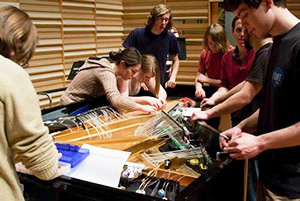
Concert Program to include:
- Entrade by
Stephen Scott
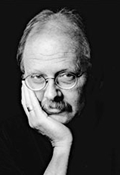 Stephen Scott
Stephen Scott was born in Corvallis, Oregon, in 1944 to scientifically trained parents who were also talented amateur musicians. Early study of music included tutoring in recorder in Bristol, England, clarinet and saxophone in elementary and secondary school bands, and private study and transcription of recordings by Charlie Parker, Miles Davis, Gil Evans, Oliver Nelson and John Coltrane in high school. Formal training in composition was at the University of Oregon and Brown University, with field studies in African music undertaken in Ghana, Tanzania and Zimbabwe in 1970.
Scott is professor of music at Colorado College. He has served on the faculty of The Evergreen State College and as visiting composer at the Aspen Music School, New England Conservatory, Princeton University, University of Southern California, and at several universities and conservatoria in Australia.
Awards have included the New England Conservatory/Rockefeller Foundation Chamber Music Prize (1980) and a National Endowment for the Arts Composers' Fellowship (1985-86). Scott is listed in New Grove's Dictionary of American Music and Baker's Biographical Dictionary of Musicians, and his work is discussed in several books on twentieth-century music. His bowed piano composition "The Tears of Niobe" represented the United States at the 1991 Internatioinal Rostrum of Composers in Paris.
Stephen Scott's website is located athttp://www.coloradocollege.edu/dept/MU/scott.html.
- Euphotic by
Ulrich Krieger
 Ulrich Krieger
Ulrich Krieger is a composer and saxophone performer. His pieces are widely performed by ensembles in Europe and the USA. Krieger’s recent focus lies on the experimental fringes of contemporary pop culture, the limbo between noise, metal, ambient, silence and experimental music. He transcribed and arranged Lou Reeds 'Metal Machine Music' for classical instruments. He has won several awards and residencies for: New York, Los Angeles, Venice, Rome, Bologna, Darmstadt and others. Ongoing collaborations include: Lou Reed, Lee Ranaldo, LaMonte Young, Phill Niblock, Christian Marcley, Mario Bertoncini, Merzbow, Michiko Hirayama, John Duncan, Zbigniew Karkowski, DJ Olive, Alan Licht, Kasper T Toeplitz, Radu Malfatti etc. He calls his way of saxophone playing 'acoustic electronics' and often uses his instrument as an 'analogue sampler' from which he can call his quasi-electronic sounds, which then get processed. His compositions also research ‘instrumental electronics’.
Recent projects are Metal Machine Trio (with Lou Reed), Text of Light (with Lee Ranaldo), and zerfall–gebiete (with Thomas Köner) - somewhere in the nirvana between experimental rock, ambient and contemporary composition. He teaches composition and Experimental Sound Practices at CalArts.
- Selections from Makrokosmos by George Crumb
- "Vortex" - Etude for 2 pianos and 1 performer, by Milen Kirov
 Milen Kirov
Milen Kirov was born in Plovdiv, Bulgaria in a musical family and started playing the piano at the age of 4. He holds a Bachelor’s degree in Piano Performance, a Master’s degree in Composition, and in May, 2012 Milen will graduate with a Doctoral degree in Performer-Composer from California Institute of the Arts. He also serves as an adjunct faculty at Chapman University’s Conservatory of Music and the Department of Music at California State University, Northridge. Milen has won numerous piano and composition awards and has performed in Bulgaria, Greece, Germany, France, Canada, and the United States. Milen has shared the stage with some of the most exciting musicians in jazz, and contemporary music today and his compositions and performances have been featured on over 20 radio and TV stations in the US, England, Scotland, Germany, and Bulgaria. Currently Milen Kirov is based in Los Angeles, where he maintains a very busy composing, teaching, and performing schedule frequently giving concerts as a soloist or with his 11-piece Balkan brass ensemble “Orkestar MÉZÉ.” His personal website is www.milenkirov.net
- Selections from Sonatas and Interludes for Prepared Piano by John Cage
Artist to include:
- Jason Hardink
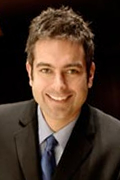 Jason Hardink
A pianist of unusual versatility and depth, Jason Hardink holds the positions of Principal Symphony Keyboard at the Utah Symphony and Artistic Director of the NOVA Chamber Music Series. Hardink’s performing interests range from recital programs given on period instruments to concerts devoted entirely to new music. He has performed concerti by Beethoven, Liszt, and Bernstein with the Utah Symphony, and he was recently featured as a soloist at the Grand Teton Music Festival in the Mozart Concerto for Three Pianos, K. 242, with pianists Jeremy Denk and Brian Connelly and conductor Donald Runnicles.
Much sought after as a chamber musician, Hardink has appeared on chamber music series including Music in Context, fEARnoMUSIC, Aperio, Music on the Hill, and the Cascade Head Chamber Music Festival. A strong advocate for new music, he served as the pianist for the Pittsburgh New Music Ensemble for three seasons. During this time he premiered over 15 works by composers such as Thomas Osborne, Daniel Kellogg, Vache Sharafyan, Pierre Jalbert, and Stefan Freund, and was featured in Curtis Curtis-Smith’s Rhapsodies for bowed piano.He has premiered works by Utah composers Morris Rosenzweig, Steven Ricks, and Bruce Quaglia. He has appeared as guest recitalist and adjudicator for both the Gina Bachauer International Piano Competition and the Oberlin International Piano Competition. Hardink holds a DMA from Rice University, and his Doctoral thesis “Messiaen and Plainchant” explores the varying levels of influence that Gregorian chant exerted on the music of Olivier Messiaen.
-
Scott Holden
and Students
 Scott Holden
Scott Holden enjoys an active career as soloist, chamber musician and teacher, and he has performed in 30 different American states and nine European countries as well as Canada and Mexico.
As first-prize winner of the 1996 Leschetizky New York Debut Competition, he made his Carnegie Recital Hall concert debut. He has also performed at the John F. Kennedy Center and Lincoln Center. Performances have been aired on CBC, NPR and NBC, and he has had many radio and television appearances on KBYU. Holden is a member of BYU's popular American Piano Quartet.
-
Neema Pazargad
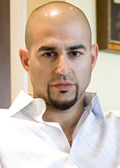 Neema Pazargad
Neema Pazargad has been playing and performing piano since the age of six. A Los Angeles native, Neema began his studies under concert pianists Claudine Perriere and Sheldon Steinberg. He then attended the University of Denver's Lamont School of Music on a full scholarship, studying with professors Alice Rybak, David Genova, and Theodore Lichtman. At Lamont, he attained a Bachelor of Music in Piano Performance and was the recipient of numerous awards in solo and collaborative piano performance. Winner of the Most Outstanding Senior in Performance of 1999, Neema was the first student from the Lamont School of Music sent to Japan to collaborate and perform with Japanese musicians from Nagoya, Japan. In 2001, Neema began his studies at the California Institute of the Arts with pianist Vicki Ray. He completed his Masters of Music in Collaborative Arts in 2004. In June of 2010 Neema joined the Piano Technicians Guild and was recently accepted to the Piano Technician Internship Program at The Colburn Conservatory in Downtown Los Angeles. Neema resides in the San Fernando Valley, working as a performer, piano instructor and piano technician.
- Jenny Cho
For the first time in history piano technicians, composers, performers, and enthusiasts of “prepared piano and extended piano techniques” will come together for an all-day event. Through meaningful dialogue via a panel discussion we hope to achieve a consensus which will lead to guidelines on how to safely “prepare” a piano and implement extended piano techniques. The definitive DVD on the topic will be presented by its author, Alan Eder. Two exciting classes highlighting Cage, Crumb, and others, and a panel discussion, followed by an evening concert, will round out the day.
Registration:
The Summit and the concert are included in the WestPac II conference registration. For those not registering for WestPac, there is a $50 fee for the day-long Extended Piano Techniques Summit (which includes the concert) or $15 for the concert only. See the Registration page for information on registering.
NOTE: Click on links to instructors' names below to see a bio.
Period 1 (8:00 – 9:30)
"Non-Traditional Piano Use" - The Definitive DVD on Prepared Pianos and Extended Piano Techniques
 Alan Eder
Alan Eder, RPT, has published various articles in the Journal and taught at regional and nation conventions. As the piano technician at CalArts, Alan produced a video about “Non-Traditional Piano Use” that has become a celebrated primary reference on the subject for pianists and piano technicians alike.
For many decades the piano has been played in a manner other than simply “fingers on the keys”. Pianos have also been “prepared” by placing items in or between the strings or “playing” the strings in ways that manufacturers never dreamed of. These methods and preparations have been called “non-traditional” in the past.
As a piano technician, musician and composer, Alan has a unique perspective of this issue. He has written on this subject and produced the DVD "Non-traditional Piano Use." How does one safely prepare a piano? What is acceptable practice, and what may damage a piano? Many questions will be answered in this informative class.
Period 2 (10:30 – 12:00)
Panel Discussion on Extended Piano Techniques
Don McKechnie,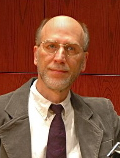 Doug McKechnie
Don began his career in piano technology after graduating from the North Bennet Street School (Boston) in 1975. He returned home to Reading, PA to start a private business and work part-time at West Chester State University. In 1985 he started his position as head piano technician at Ithaca College. Don has been a member of PTG since 1975 and has held many positions in the organization including chapter president, regional conference chair and chair of the PTG College and University Technicians Committee. He was the co-editor of the 2003 revised PTG Guidelines for Institutional Piano Maintenance. Don has taught classes at local, regional and national PTG seminars. He is a certified Stanwood TouchDesign installer and has attended Steinway factory seminars. Don also teaches a class at Ithaca College on the basics of piano technology.
Alan Eder
Alan Eder, RPT, has published various articles in the Journal and taught at regional and nation conventions. As the piano technician at CalArts, Alan produced a video about “Non-Traditional Piano Use” that has become a celebrated primary reference on the subject for pianists and piano technicians alike.
Scott Holden
Scott Holden enjoys
an active career as soloist, chamber musician and teacher, and he has performed
in 30 different American states and nine European countries as well as Canada
and Mexico.
As first-prize winner of the 1996 Leschetizky New York Debut Competition, he
made his Carnegie Recital Hall concert debut. He has also performed at the John
F. Kennedy Center and Lincoln Center. Performances have been aired on CBC, NPR
and NBC, and he has had many radio and television appearances on KBYU. Holden
is a member of BYU's popular American Piano Quartet.
Jason Hardink
A pianist of unusual versatility and depth, Jason Hardink holds the positions of Principal Symphony Keyboard at the Utah Symphony and Artistic Director of the NOVA Chamber Music Series. Hardink’s performing interests range from recital programs given on period instruments to concerts devoted entirely to new music. He has performed concerti by Beethoven, Liszt, and Bernstein with the Utah Symphony, and he was recently featured as a soloist at the Grand Teton Music Festival in the Mozart Concerto for Three Pianos, K. 242, with pianists Jeremy Denk and Brian Connelly and conductor Donald Runnicles.
Much sought after as a chamber musician, Hardink has appeared on chamber music series including Music in Context, fEARnoMUSIC, Aperio, Music on the Hill, and the Cascade Head Chamber Music Festival. A strong advocate for new music, he served as the pianist for the Pittsburgh New Music Ensemble for three seasons. During this time he premiered over 15 works by composers such as Thomas Osborne, Daniel Kellogg, Vache Sharafyan, Pierre Jalbert, and Stefan Freund, and was featured in Curtis Curtis-Smith’s Rhapsodies for bowed piano.He has premiered works by Utah composers Morris Rosenzweig, Steven Ricks, and Bruce Quaglia. He has appeared as guest recitalist and adjudicator for both the Gina Bachauer International Piano Competition and the Oberlin International Piano Competition. Hardink holds a DMA from Rice University, and his Doctoral thesis “Messiaen and Plainchant” explores the varying levels of influence that Gregorian chant exerted on the music of Olivier Messiaen.
 Michael Hicks
Born in San Jose, California, Michael
Hicks (1956- ) graduated from BYU in Music
Composition in 1980.
He later received a DMA from the University
of Illinois at Urbana-Champaign in 1984 and has been teaching at
BYU since 1985. His chamber and solo works have been performed and recorded
by BYU faculty and student artists and by other performers around the country
(including the Black Swamp Saxophone Quartet, the Menlo Brass Quintet, and
the Memphis Symphony Brass Quintet) and at events of the American Society
of University Composers, Cincinnati Composers Guild, and the Subtropics
Music Festival. His work as a singer-songwriter appears on the
Tantara CD Valentine St. (2006)
Hicks has authored historical and analytical articles that have appeared in many
books and journals (including American Music, Journal of Aesthetic Education,
Journal of the American Musicological Society, Musical Quarterly, and Perspectives
of New Music). He has been a guest lecturer at Stanford and
the University of California at Berkeley and
has read papers at various conferences (including UCLA's multidisciplinary Conference
on American Studies Connecting with Religion, 1991) and national meetings of
the Society for American Music and
the American Musicological Society.
In August 2006 he was appointed editor of the journal American Music.
His awards include the ASCAP-Deems
Taylor Award (1994, 2003 and 2010), the Frances and Emily Chipman Award
(Mormon History Association, 1989), and the Morris S. Rosenblatt Award (Utah
Historical Society, 1991).
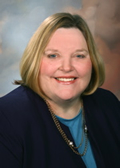 Dr. Sue Neimoyer
Trained as a composer and pianist, Dr. Sue Neimoyer is an Assistant Professor of Musicology at the University of Utah School of Music, where she teaches courses in nineteenth and twentieth-century music. Her research has thus far focused on early twentieth-century American art music and the interface of cultivated and popular cultures in the music of so-called "crossover composers," notably George Gershwin, on whom she has most recently published in The Musical Quarterly.
Moderated by Marcus Smith
Marcus Smith
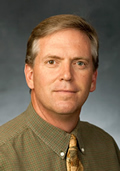 Marcus
Smith serves as Radio Services Manager for BYU Broadcasting, overseeing both
Classical 89 (KBYU-FM, our public station) and BYU Radio. He also fills the
role of producer and anchoring host for "Thinking Aloud". Now
going on 14 years as a broadcaster, Marcus was long the morning host for Classical
89. With a master’s degree in German literature from BYU (1992), he has
worked as a writer, editor, translator, teacher, and composer of sacred music.
He’s known as a wordsmith, with a strong hankering to place the right
word in the right place at the right time … at least as often as occasion
permits. He’ll even admit to some small successes in this area … but
concedes it’s a dicey game with low stakes. He likes a whole lot of music,
from loud to soft, from Bach to Berlioz, Italian to American, and from the
Twilight of the Gods to the Resurrection Symphony.
Marcus
Smith serves as Radio Services Manager for BYU Broadcasting, overseeing both
Classical 89 (KBYU-FM, our public station) and BYU Radio. He also fills the
role of producer and anchoring host for "Thinking Aloud". Now
going on 14 years as a broadcaster, Marcus was long the morning host for Classical
89. With a master’s degree in German literature from BYU (1992), he has
worked as a writer, editor, translator, teacher, and composer of sacred music.
He’s known as a wordsmith, with a strong hankering to place the right
word in the right place at the right time … at least as often as occasion
permits. He’ll even admit to some small successes in this area … but
concedes it’s a dicey game with low stakes. He likes a whole lot of music,
from loud to soft, from Bach to Berlioz, Italian to American, and from the
Twilight of the Gods to the Resurrection Symphony.
Two composers, two piano technicians and two concert artists
Marcus Smith from BYU Broadcasting will moderate a discussion to help find common ground where both the needs and desires of the composers and artists can be met and at the same time alleviate the technicians concerns for the piano. From this discussion a document that will be written of the do's and don’ts for piano use and will be made available for those who are interested in this genre of music.
Period 3 (1:00 – 2:30)
Fishing Line and Thimbles: Reinventing the American Piano
Jason Hardink
A pianist of unusual versatility and depth, Jason Hardink holds the positions of Principal Symphony Keyboard at the Utah Symphony and Artistic Director of the NOVA Chamber Music Series. Hardink’s performing interests range from recital programs given on period instruments to concerts devoted entirely to new music. He has performed concerti by Beethoven, Liszt, and Bernstein with the Utah Symphony, and he was recently featured as a soloist at the Grand Teton Music Festival in the Mozart Concerto for Three Pianos, K. 242, with pianists Jeremy Denk and Brian Connelly and conductor Donald Runnicles.
Much sought after as a chamber musician, Hardink has appeared on chamber music series including Music in Context, fEARnoMUSIC, Aperio, Music on the Hill, and the Cascade Head Chamber Music Festival. A strong advocate for new music, he served as the pianist for the Pittsburgh New Music Ensemble for three seasons. During this time he premiered over 15 works by composers such as Thomas Osborne, Daniel Kellogg, Vache Sharafyan, Pierre Jalbert, and Stefan Freund, and was featured in Curtis Curtis-Smith’s Rhapsodies for bowed piano.He has premiered works by Utah composers Morris Rosenzweig, Steven Ricks, and Bruce Quaglia. He has appeared as guest recitalist and adjudicator for both the Gina Bachauer International Piano Competition and the Oberlin International Piano Competition. Hardink holds a DMA from Rice University, and his Doctoral thesis “Messiaen and Plainchant” explores the varying levels of influence that Gregorian chant exerted on the music of Olivier Messiaen.
Jason Hardink, pianist of the Utah Symphony, will present a lecture on two wildly imaginative piano works by American composers from the early 1970s, the George Crumb Makrokosmos and the Curtis Curtis-Smith Rhapsodies. Both works made tremendous strides in redefining the sonority of piano music with newly invented techniques. The discussion will include a comprehensive demonstration of the extended techniques involved in each work, with a special focus given to the use of bows in the Curtis-Smith.
Period 4 (3:30 – 5:00)
John Cage and the Prepared Piano
 Christian Asplund
Canadian-American composer-performer Christian Asplund’s interests include intersections of text/music, improvisation/composition, and modular textures/forms. He has received awards from Genesis Foundation, Barlow Endowment, Artistrust, King County, ASCAP, Alpert Foundation and Jack Straw Foundation. His teachers have included Thea Musgrave, Alvin Curran, Joel Durand, and John Rahn. He has performed with Stuart Dempster, Malcolm Goldstein, and Christian Wolff, and John Butcher. His music appears on Present Sounds, Tzadik, Sparkling Beatnik, and other labels. His scores are published by Frog Peak Music. He has written books and articles for Perspectives of New Music, American Music, University of Washington and University of Illinois Presses. Words used by the press to describe his music include: passion, panoramic power, pure pointillist, plaintive, painstaking, rhythmically toothy, rocking, remarkable, rollicking, searing, subdued, soothing, submersive, splendid, unique, ethereal, mesmerizing, mind-blowing, otherworldly, absorbing, intelligent, idiosyncratic, distinctive, captivating, bewitching. He lives in Provo, Utah where he teaches at Brigham Young University.
Asked to provide a dance score by Syvilla Fort in 1938, Cage found the pit too small to accommodate his percussion orchestra. He found that by inserting mutes of various materials between strings, he could get the gamelan-like sounds from a piano and the prepared piano was born. In the next 15 years, Cage produced many works for prepared piano, gradually refining and expanding its expressive range. Many of these pieces are rarely heard live because they each have unique preparations that require a dedicated piano.
In celebration of the centenary year of Cage’s birth, Christian, with assistance from BYU student pianists, will provide us with a unique opportunity to see the preparation process and performance of four rarely heard Cage pieces for the prepared piano.
Piano Preparation
(5:00- 7:30)
Piano will be prepared for the evening concert. This will be open for attendees to watch.